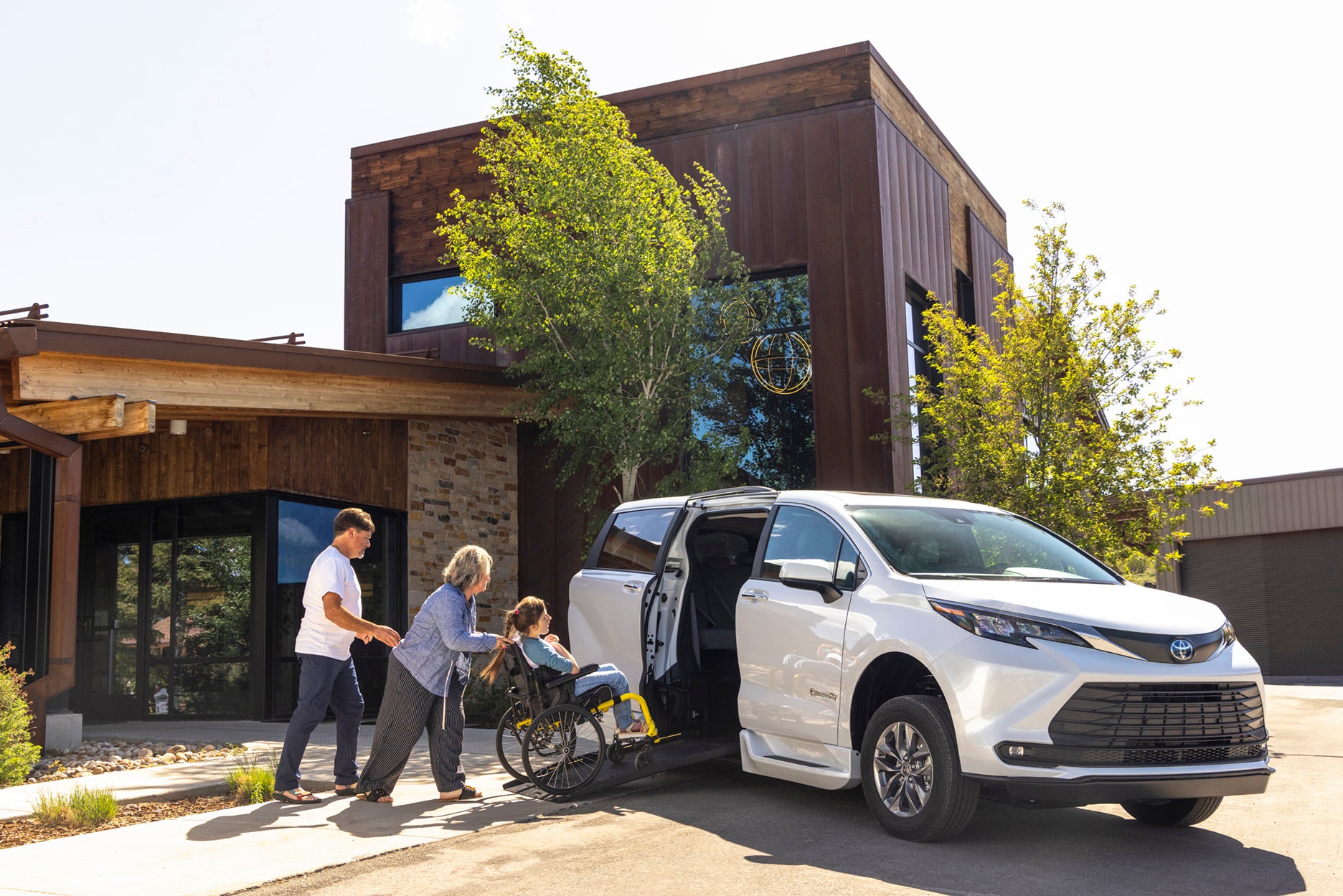


Blog

All Wheelchair Accessible Vehicles Jerry's Mobility Service Mobility Vehicles Things to Do in Baltimore Vehicle Inventory Finance Accesibility Nottingham Used Cars
wheelchair_access_vehicles

Long-Term Reliability and Resale Value: Chrysler, Dodge & RAM Mobility Vehicles

Quick Answer: Do Chrysler, Dodge, and RAM Mobility Vans Hold Their Resale Value? Yes, choosing a Chrysler wheelchair van in Baltimore—or a pre-owned Dodge or RAM conversion—delivers exceptional long-term reliability and strong resale value retention. Driven by the proven 3.6L Pentastar V6 engine and crash-tested BraunAbility lowered-floor engineering, Stellantis mobility platforms hold significant equity on the pre-owned market due to consistent demand from caregivers and buyers in Rosedale. The Stellantis Mobility Legacy: Pentastar V6 Powertrains & Chassis Durability For decades, Stellantis vehicles (including Chrysler, Dodge, and RAM) have served as the foundational chassis for North America's mobility industry. From the legacy Dodge Grand Caravan to modern Chrysler Pacifica and RAM ProMaster upfits, these vehicles are engineered to accommodate structural lowered-floor modifications without compromising mechanical integrity. For families, caregivers, and independent drivers across Baltimore, MD, and Rosedale, MD, evaluating a vehicle's long-term total cost of ownership goes beyond the initial purchase price. Understanding how Chrysler, Dodge, and RAM mobility vehicles perform over 100,000+ miles—and how well they hold trade-in equity—helps buyers make informed investments on pre-owned lots. At the heart of this reliability is the award-winning 3.6-liter Pentastar V6 engine. Producing 287 horsepower in minivans and 280 horsepower in full-size vans, this naturally aspirated engine is renowned for its straightforward maintenance, widespread replacement part availability, and proven longevity under heavy daily use. Evaluating Resale Value Retention Across Chrysler, Dodge & RAM Platforms Because lowering a vehicle floor pan and installing automated ramps requires major structural engineering, the mobility conversion itself retains substantial value independent of chassis depreciation. 1. Chrysler Pacifica Mobility Vans The Chrysler Pacifica stands as the premium flagship of the side-entry mobility market. Depreciation Performance: Thanks to high market demand for full-cut lowered floor conversions, power in-floor ramps, and luxury cabin technology, a pre-owned Chrysler Pacifica wheelchair van retains some of the highest resale equity in the adaptive vehicle industry. Long-Term Durability: Features heavy-duty door rollers, reinforced subframe side rails, and galvanized steel floor panels designed to withstand Mid-Atlantic humidity and winter road salt. 2. Chrysler Voyager Mobility Vans The Chrysler Voyager offers the exact same mechanical chassis and crash-tested subframe as the Pacifica, packaged in a value-driven trim layout. Depreciation Performance: Because the initial purchase price of a pre-owned Chrysler Voyager wheelchair van is lower, owners experience a gentler overall depreciation curve. Long-Term Durability: Available with manual fold-out ramp configurations (such as the BraunAbility CompanionVan), the elimination of electric ramp motors significantly reduces mechanical wear over time. 3. Dodge Grand Caravan (Legacy Used Market) While production of the Dodge Grand Caravan ended in 2020, it remains one of the most widely driven pre-owned mobility minivans in Greater Baltimore. Depreciation Performance: Grand Caravan models have already cleared their steep initial depreciation phase, allowing budget-focused buyers searching for a Dodge wheelchair van for sale to enter accessible vehicle ownership at a low price point. Long-Term Durability: Simple mechanical architecture and affordable OEM replacement parts make maintaining a high-mileage Grand Caravan cost-effective for families. 4. RAM ProMaster Full-Size Vans The RAM ProMaster caters to families and operators requiring maximum vertical standing height (up to 76 inches) and high weight capacities. Depreciation Performance: Due to strong demand from commercial operators, NEMT providers, and large families needing bariatric chair capacity, pre-owned ProMaster vans maintain strong resale value. Long-Term Durability: The Front-Wheel-Drive (FWD) configuration eliminates the rear driveshaft, reducing moving parts and simplifying underbody maintenance. Essential Factors That Protect Your Mobility Van's Trade-In Value To maximize trade-in returns when upgrading to a newer model down the road, owners should focus on three critical maintenance areas: Preventative Ramp & Kneeling Service: Having an authorized technician clean door tracks, adjust drive cables, and lubricate pivot hinges every 6 months prevents costly component wear and protects conversion equity. Underbody Rust & Corrosion Protection: Applying rust-inhibiting undercoatings protects the lowered floor steel and subframe welds from Mid-Atlantic winter road brine. Documented Dealer Service History: Keeping detailed records of all chassis maintenance and conversion checkups at an authorized dealer proves vehicle health to future buyers. Detailed residual value guidelines and reconditioning resources can be reviewed through BraunAbility Vehicle Value Resources. Maintenance Best Practices for Chrysler, Dodge & RAM Conversions Flush Transmission Fluid at Recommended Intervals: Smooth shifting protects both the 9-speed automatic transmission on Pacifica/Voyager models and the 6-speed/9-speed units on ProMaster vans. Inspect Secondary Auxiliary Batteries: Conversion electronics often rely on auxiliary power sources. Testing battery voltage prevents low-voltage errors from locking automated side doors or ramp actuators. Clean Floor Tie-Down Tracks: Vacuuming dirt out of floor-mounted L-tracks ensures Q'Straint latching mechanisms lock smoothly without binding. Monitor Suspension Bushings: Converted vans carry lowered subframe weight; inspecting front struts and rear leaf/coil springs ensures original ride quality remains intact. Explore Pre-Owned Chrysler & RAM Mobility Vans at Jerry's Mobility Whether you are searching for a high-end Chrysler Pacifica, an economical Chrysler Voyager, or a spacious RAM ProMaster, choosing a pre-owned vehicle from Jerry’s Mobility ensures your investment is thoroughly vetted. Our certified technicians inspect every pre-owned van for chassis diagnostic health, structural frame integrity, power ramp operation, and floor seal weatherproofing. Visit our showroom today to test drive our inventory, review vehicle history reports, and explore flexible pre-owned financing options tailored to your budget.

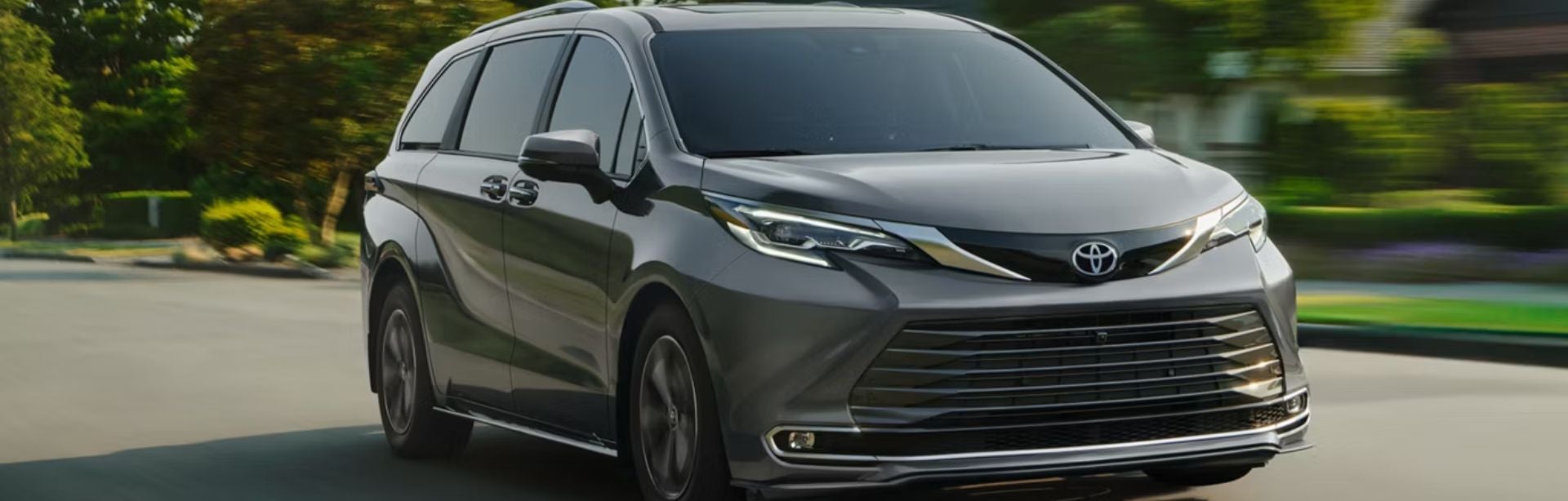
Toyota sienna wheelchair

When Minivans Aren't Big Enough: Guide to Used Full-Size Wheelchair Vans for Greater Baltimore Families

Quick Answer: When Should a Family Choose a Used Full-Size Wheelchair Van Over a Minivan? When a passenger requires more than 58 inches of interior cabin height, uses an extra-heavy power wheelchair exceeding standard ramp limits, or needs space for multiple wheelchair positions, they should choose a used full size wheelchair van that Baltimore drivers trust. Full-size options—like the high-roof RAM ProMaster or heavy-duty Ford E-350—provide up to 76 inches of vertical standing room, hydraulic platform lifts rated for 1,000 lbs, and expanded cabin volume for families across Rosedale and Perry Hall. Why Some Baltimore Families Outgrow Traditional Minivans and Crossovers Minivans like the Toyota Sienna or Chrysler Pacifica, alongside crossover SUVs like the Chevrolet Traverse, serve as ideal accessibility solutions for most personal mobility needs. However, standard lower-floor minivan conversions are bounded by factory rooflines and chassis width constraints. For certain families across Baltimore, MD, Rosedale, MD, and Perry Hall, MD, daily transportation requirements exceed what a traditional minivan can comfortably accommodate. Recognizing when your mobility needs require a full-size platform prevents buying a vehicle that feels cramped or restricts physical comfort. Common Signs Your Family Needs a Full-Size Van Platform Seated Vertical Height Constraints: Taller seated power chair users or individuals utilizing specialized tilt-in-space rehab seating often require significantly more vertical headroom than a standard 54-to-56-inch door opening can provide. Heavy Power Chair & Equipment Weights: Bariatric power wheelchairs or complex rehab chairs paired with heavy medical accessories can approach or exceed standard 800-lb ramp limits. Multiple Mobility Device Positions: Families transporting two wheelchair users simultaneously—or needing space for gurneys and large medical support equipment—require expanded floor space. Caregiver Standing Access: Ambulatory caregivers assisting passengers during entry, exit, or securement benefit from full interior standing room inside the cabin. Option 1: RAM ProMaster (Front-Wheel Drive & Standing Headroom) The RAM ProMaster has become one of the most popular choices for families seeking full-size accessibility without sacrificing driving maneuverability. Key Accessibility Advantages 76 Inches of Interior Standing Height: High-Roof ProMaster models offer up to 6 feet 4 inches of interior standing room. Caregivers can stand completely upright while attaching wheelchair tie-down restraints. Low Step-In Floor Height: Because the ProMaster uses a Front-Wheel Drive (FWD) drivetrain, there is no driveshaft running underneath the rear chassis. This creates a low floor height from the factory, resulting in a gentle, easy-to-climb ramp angle. Ultra-Wide Side-Entry Power Ramps: BraunAbility upfits feature wide side-entry ramps with 1,000-lb load capacities, providing smooth entry for broad complex rehab chairs. Families considering this spacious platform can explore pre-owned configurations on our RAM ProMaster wheelchair van model page. Option 2: Pre-Owned Ford E-350 (Heavy-Duty Frame & Hydraulic Lifts) For families who require maximum structural payload capacity and heavy lifting power, a pre-owned Ford E-350 remains a dependable workhorse. Key Accessibility Advantages Body-on-Frame Durability: Built on a full-length steel ladder frame with a heavy-duty V8 powertrain, the E-350 easily supports heavy passengers, multi-wheelchair floor layouts, and trailer towing. Dual-Post Hydraulic Platform Lifts: Converted Ford E-350 vans typically feature heavy-duty BraunAbility dual-post hydraulic lifts mounted at the rear or side doors. Rated for 800 to 1,000 lbs, these steel platform lifts raise and lower heavy power chairs with complete mechanical stability. Raised Roof Extensions: Pre-owned E-350 models equipped with fiberglass raised roofs provide increased interior headroom and tall 56-inch door openings. Learn more about heavy-duty hydraulic platform options on our dedicated Ford E-350 wheelchair van landing page. Federal ADA Safety & Interior Securement Guidelines Whether utilizing a full-size van for personal family transport or community use, maintaining proper occupant securement standards is essential for highway safety. Complete regulatory guidelines for adaptive transportation safety can be reviewed through the U.S. Department of Justice ADA Regulations. Minimum 56-Inch Entrance Height: Federal guidelines mandate a minimum of 56 inches of vertical door opening clearance to prevent head contact during boarding. 4-Point Floor Anchorage: Wheelchairs must be secured facing forward using a 4-point floor-anchored L-track or Q'Straint tie-down system. 3-Point Occupant Restraints: Every wheelchair position requires an independent lap and shoulder belt anchored directly to the vehicle structure, operating separately from the chair's lap belt. Local Driving and Parking Realities in Greater Baltimore Operating a full-size mobility vehicle requires planning for local parking and overhead clearance across different Baltimore County environments: Urban Baltimore City Driving: The RAM ProMaster's front-wheel-drive design provides a tight turning radius, making it surprisingly agile when navigating tight street corners and rowhouse alleys. However, drivers should verify clearance before entering downtown parking garages with ceilings under 7 feet 6 inches. Suburban Neighborhoods in Rosedale and Perry Hall: Single-family homes in Perry Hall and Rosedale with open driveways offer ideal space for deploying side ramps or rear hydraulic lifts. Parking outdoors on a flat driveway pad eliminates garage roof height limitations while providing unrestricted loading space. Finding Your Ideal Pre-Owned Full-Size Van at Jerry's Mobility Transitioning into a full-size mobility van is a big decision, but you do not have to navigate the specifications alone. At Jerry’s Mobility, our team conducts personalized vehicle fittings to ensure door clearance, ramp width, and interior height match your exact power chair dimensions. Every pre-owned full-size van on our lot undergoes a thorough multi-point technician inspection. We inspect hydraulic lift pumps, test power ramp gearboxes, verify subframe structural integrity, and ensure floor tie-down tracks meet strict safety standards. Contact our showroom today to schedule a private consultation, explore flexible pre-owned financing options, and test drive a full-size mobility vehicle.

wheelchair_access_sideway

Side-Entry vs. Rear-Entry Wheelchair Vans: Which Is Right for Baltimore Drivers?

Quick Answer: What Is the Difference Between Side-Entry and Rear-Entry Wheelchair Vans? The primary difference between a side entry wheelchair van Baltimore drivers choose and a rear-entry conversion lies in ramp deployment direction, parking requirements, and seating flexibility. Side-entry vans allow wheelchair users to drive or ride in the front passenger seat but require extra side clearance for ramp extension. Rear-entry vans deploy from the tailgate, fitting into standard parking spaces in nearby Rosedale and Perry Hall as well. Understanding Side-Entry and Rear-Entry Wheelchair Van Conversions Selecting a wheelchair-accessible vehicle is one of the most significant investments an individual, family, or caregiver will make. Beyond choosing the right vehicle make and model, deciding between a side-entry or a rear-entry ramp conversion impacts your daily convenience, parking options, and interior seating arrangements. Both conversion styles offer safe, crash-tested mobility solutions engineered by leaders like BraunAbility. However, urban parking conditions across downtown Baltimore, suburban driveway setups in Rosedale, and garage clearances in Perry Hall require careful evaluation. Matching vehicle ramp mechanics to your physical mobility goals and local driving routine ensures long-term satisfaction. Deep Dive: Side-Entry Wheelchair Vans Side-entry conversions feature a lowered vehicle floor from behind the front bumper back to the rear axle. The access ramp extends outward from the side sliding door on either the passenger or driver side. Key Benefits of Side-Entry Conversions Driver-Position Access: Side-entry minivans offer removable front bucket seats. This setup allows a wheelchair user to roll directly into the driver’s position using specialized hand controls or transfer into the driver seat. Front-Passenger Seating: Wheelchair users who prefer to sit next to the driver in the front row can easily do so in a side-entry van, offering equal sightlines and conversation access. Unobstructed Rear Cargo Space: Because the ramp enters through the side door, the original trunk or rear cargo area behind the third-row seat remains entirely intact for luggage, groceries, and medical supplies. Curbside Loading Safety: On urban streets, side-entry ramps allow passengers to deploy directly onto sidewalks rather than into street traffic. Parking & Space Considerations Requires Side Clearance: Deploying a side-entry ramp requires approximately 4 to 5 feet of open space alongside the vehicle. Drivers must park in designated van-accessible handicap spaces with hashed access aisles to ensure room for loading. Full-Cut Floor Investment: Because side-entry conversions require a full-cut lowered floor and chassis reinforcement, initial conversion costs are higher than standard rear-entry setups. Deep Dive: Rear-Entry Wheelchair Vans Rear-entry conversions lower the floor in the center and rear sections of the vehicle. The ramp unfolds directly from the tailgate, allowing the wheelchair user to enter from behind the vehicle and roll into the mid-cabin position. Key Benefits of Rear-Entry Conversions Standard Parking Space Compatibility: Because the ramp deploys out the back, you do not need open side space to load or unload. You can park in standard parking spots, parallel street spaces, or narrow residential driveways. Lower Purchase and Conversion Cost: Rear-entry modifications require less structural alteration to the mid-section chassis, making pre-owned rear entry wheelchair vans in Baltimore a budget-friendly option for families. Mid-Cabin Family Proximity: Caregivers or family members can sit on second-row passenger seats directly alongside the wheelchair user, providing comfortable interaction during travel. Parking & Space Considerations No Driver-Seat Access: A wheelchair user cannot drive a rear-entry vehicle directly from their chair, as the factory front seats and floor remain completely intact. Rear Traffic Loading: Unloading a rear-entry ramp on busy city streets requires opening the tailgate into traffic lanes unless parked in a driveway or dedicated parking lot. Reduced Trunk Storage: The stowed rear ramp occupies part of the rear trunk bay, reducing deep rear cargo space. Local Baltimore Parking & Driving Scenarios: Comparing Real-World Usability Where you live and park across Greater Baltimore plays a major role in which conversion style performs best. Downtown Baltimore & Rowhouse Streets Navigating urban Baltimore neighborhoods—such as Federal Hill, Fells Point, or Mount Vernon—often means relying on parallel street parking where side access aisles do not exist. A rear-entry van allows a caregiver to roll a passenger in from the back bumper without worrying about adjacent cars parking too close to the side doors. However, if you frequently load at urban curbsides or medical center drop-off zones, a side-entry model keeps the passenger safely on the sidewalk. Suburban Living in Rosedale and Perry Hall In suburban communities across Rosedale and Perry Hall, homeowners frequently utilize double-car garages, wide concrete driveways, and spacious shopping center parking lots. A side-entry vehicle, such as a pre-owned Toyota Sienna Wheelchair Van, excels in these environments, allowing independent drivers to deploy power ramps effortlessly onto wide garage floors or driveway pads. How to Decide Which Ramp Configuration Fits Your Family To determine which conversion style fits your physical needs and daily routine, evaluate these core factors: Will the Wheelchair User Drive? If the person using a wheelchair plans to drive the vehicle independently, a side-entry conversion is required. Where Do You Park Most Often? If your daily routine involves standard parking spaces or tight driveways without side aisles, a rear-entry van provides maximum parking convenience. What Is Your Overall Budget? Buyers seeking lower upfront costs often find rear-entry pre-owned vans fit tight financial parameters while delivering exceptional reliability. Do You Carry Heavy Cargo? Families traveling frequently with sports equipment, luggage, or multiple mobility devices may prefer the open rear trunk space preserved by side-entry vans. Before finalizing any vehicle purchase, consulting adaptive driving guidelines published by the National Highway Traffic Safety Administration (NHTSA) ensures that your chosen vehicle setup complies with essential occupant safety and securement standards. Explore Pre-Owned Mobility Vans at Jerry's Mobility Choosing between a side-entry and a rear-entry wheelchair van comes down to your personal mobility needs, vehicle seating preferences, and home parking environment. At Jerry’s Mobility, our team of mobility specialists conducts hands-on vehicle fittings and ramp demonstrations for families across Baltimore, Rosedale, and Perry Hall. Visit our showroom today to test drive both side-entry and rear-entry conversions and find the ideal wheelchair van Baltimore drivers rely on for long-term independence.

wheelchair SUVs

Wheelchair Accessible SUVs vs. Minivans: Is the Chevy Traverse Right for You?

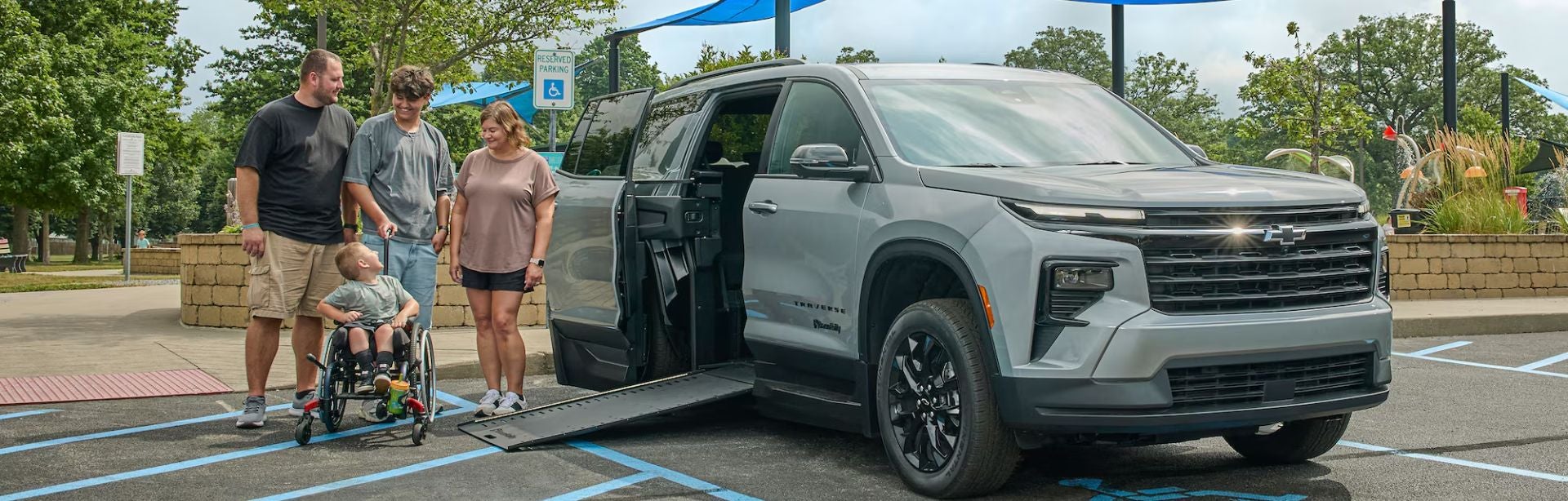
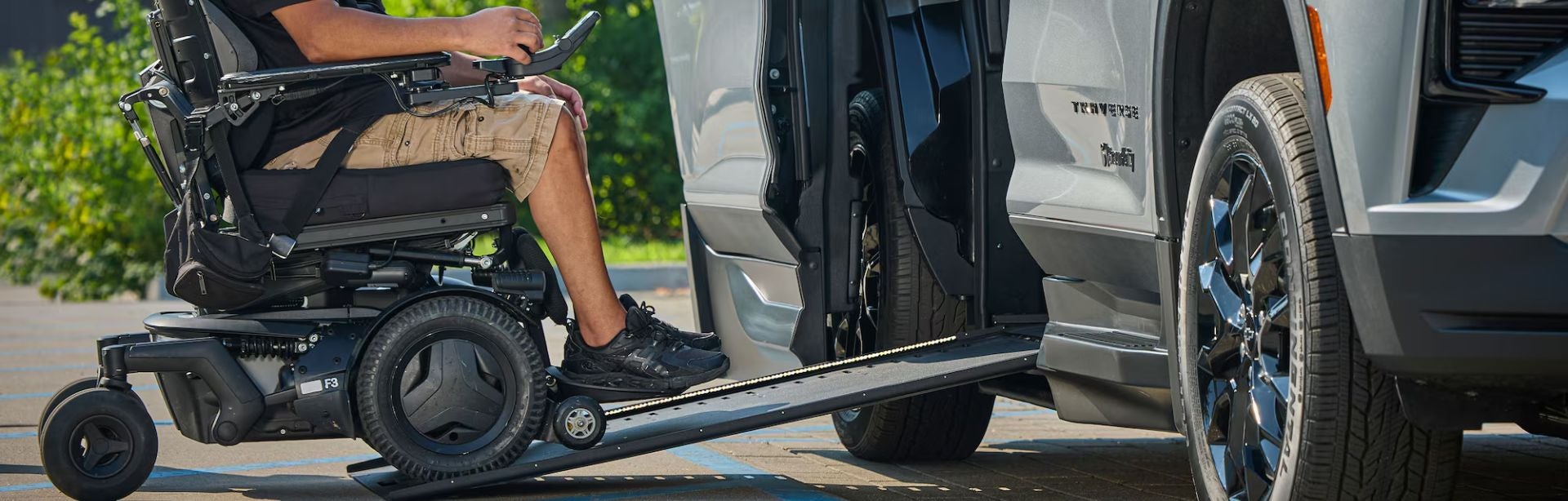
Quick Answer: Is a Wheelchair Accessible Chevy Traverse Better Than a Minivan? Finding a wheelchair accessible Chevy Traverse in Baltimore means enjoying modern crossover styling, higher ground clearance, and a heavy-duty 1,000-lb capacity power in-floor ramp, making it an attractive alternative to traditional minivans. While minivans provide slightly more vertical cabin space for exceptionally tall power chair users, a wheelchair-accessible SUV delivers comparable door opening widths (30.5 inches) and driver-transfer flexibility for buyers. The Shift from Traditional Minivans to Mobility SUVs in Greater Baltimore For decades, minivans were the primary vehicle option for wheelchair users and caregivers requiring lowered floor conversions. While minivans like the Toyota Sienna and Chrysler Pacifica remain popular for their spacious interiors, many drivers prefer the sleek styling, command-of-the-road seating position, and rugged appeal of a crossover SUV. Vehicle modifiers engineered the first mass-produced side-entry SUV conversion on the Chevrolet Traverse platform. For families and independent drivers across Baltimore, MD, Rosedale, MD, and Perry Hall, MD, deciding between a minivan and a wheelchair accessible SUV comes down to balancing aesthetic preference, ground clearance needs, door clearance dimensions, and budget constraints. Key Differences: Wheelchair Accessible SUVs vs. Minivans Understanding how a converted crossover SUV compares to a standard wheelchair-accessible minivan helps narrow down the right choice for your daily commute. 1. Exterior Styling and Aesthetic Appeal Crossover SUV Appeal: The Chevy Traverse retains its aggressive front grille, bold crossover lines, and athletic stance. The lowered-floor modification is integrated beneath body-molded side flares, concealing the conversion elements. Minivan Profile: Minivans feature traditional sliding door designs and longer rooflines, offering a classic family vehicle appearance. 2. Ground Clearance and Mid-Atlantic Weather Performance Crossover SUV Performance: The Chevy Traverse offers higher ground clearance than most lowered-floor minivans. This extra clearance makes navigating steep driveway angles in Perry Hall, snow-drifted suburban streets, or rough road surfaces across Baltimore County easier without scraping chassis undercomponents. Minivan Performance: Lowered-floor minivans ride closer to the road to keep ramp angles gentle. While this provides easy entry, drivers must be mindful of high curbs and steep drainage dips in urban parking lots. 3. Interior Cabin Space and Floor Flexibility Crossover SUV Interior: The BraunAbility Chevy Traverse features a full-cut lowered floor extending from the firewall to the rear seats. Removable front driver and passenger seats enable a wheelchair user to drive directly from their chair or sit in the front passenger position. BLVD.com+ 1 Minivan Interior: Minivans generally feature slightly taller vertical interior dimensions, offering extra headroom for passengers seated in tall power wheelchairs. Technical Features of the BraunAbility Chevrolet Traverse Engineered by BraunAbility, the converted Chevy Traverse delivers industry-leading accessibility specs without sacrificing safety or performance. Detailed technical metrics and engineering safety standards can be reviewed directly through BraunAbility Official Conversion Specifications. Door Opening Usable Width: 30.5 inches, providing one of the widest door frames available in the side-entry mobility segment. BLVD.com Door Opening Usable Height: 54.5 inches at the center of the door frame, accommodating most standard and power wheelchair users comfortably. BLVD.com Ramp Capacity: Industry-leading 1,000-lb weight capacity, designed to easily support heavy power chairs, accessories, and occupants. Power In-Floor Ramp: The 30.5-inch wide ramp stows beneath the vehicle floor when not in use. This keeps the interior doorway unobstructed for ambulatory family members entering and exiting the vehicle. Automatic Kneeling System: An integrated suspension kneeling system lowers the rear vehicle frame upon ramp deployment, reducing the ramp incline angle for effortless loading. Local Driving and Parking Considerations across Greater Baltimore Choosing between an SUV and a minivan also depends on where and how you drive across the Mid-Atlantic region. Navigating Downtown Baltimore Streets Parking in downtown Baltimore often requires parallel street parking or navigating tight garage structures. The power in-floor ramp system on the Chevy Traverse deploys smoothly over sidewalk curbs. Because the ramp stows under the floor rather than folding up inside the door frame, passenger side visibility remains clear through the side windows when changing lanes on I-95 or I-695. Suburban Commuting in Rosedale and Perry Hall For homeowners in Rosedale and Perry Hall with sloped residential driveways or double-car garages, the Traverse's elevated ground clearance reduces chassis bottoming. Its all-wheel-drive (AWD) options provide extra traction during Mid-Atlantic winter storms and rainy seasons. Who Should Choose the Chevy Traverse Wheelchair SUV? Independent Drivers: Wheelchair users who plan to operate the vehicle using hand controls or driving aids benefit from the removable front seats and driver-position floor space. A&J Mobility Heavy Power Chair Users: The 1,000-lb capacity power in-floor ramp provides peace of mind for individuals using heavy power chairs. Style-Conscious Buyers: Families who prefer the athletic look of an SUV over a traditional minivan layout. Finding a Pre-Owned Chevy Traverse Mobility SUV at Jerry's Mobility Because brand-new converted SUVs carry premium price tags, searching for a certified pre-owned model provides exceptional value. At Jerry's Mobility, our team inspects every pre-owned crossover SUV to ensure the power ramp, lowered floor seals, kneeling actuators, and engine components meet strict safety standards. Exploring our inventory of pre-owned wheelchair accessible vans and crossover SUVs allows you to find a high-quality mobility vehicle that fits your personal budget. Whether you require specialized financing options, trade-in appraisals, or assistance applying state mobility grants, our specialists are ready to help. Visit our showroom today to schedule a personal fitting, test drive a BraunAbility Chevy Traverse, and see if a wheelchair-accessible SUV is the right fit for your lifestyle.

2027_Chrysler_Pacifica

Chrysler Pacifica vs. Voyager BraunAbility Conversions: Features, Trim Levels & Value

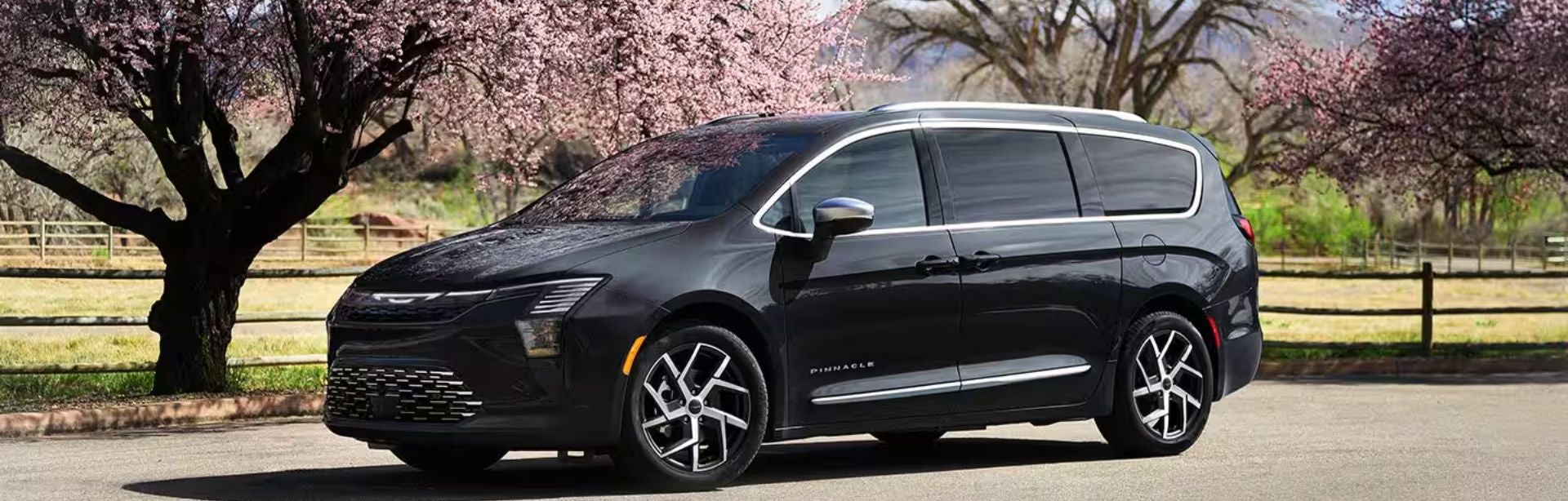
Quick Answer: What Is the Main Difference Between Chrysler Pacifica and Voyager Wheelchair Vans? The primary difference between Chrysler Pacifica and Chrysler Voyager BraunAbility conversions lies in trim level features, conversion complexity, and target user independence. The Chrysler Pacifica offers full-cut lowered floor conversions with power infloor or fold-out ramps, high-end interior technology, and drive-from-wheelchair capabilities. The Chrysler Voyager serves as a budget-conscious alternative, featuring value-driven trim levels, manual or power fold-out ramps, and caregiver-focused center-cut floor options. Overview of Chrysler Mobility Platforms in Greater Baltimore For families and independent drivers across Baltimore, MD, and Rosedale, MD, Chrysler minivans represent the flagship chassis for BraunAbility lowered-floor accessibility. Built on the same core engineering platform, the Chrysler Pacifica and Chrysler Voyager share identical safety foundations, exterior dimensions, and mechanical durability. However, BraunAbility equips these two vehicles with different conversion styles to meet distinct financial budgets, physical needs, and lifestyle preferences. Deciding between a pre-owned or new Chrysler Pacifica Wheelchair Van and a value-packed Chrysler Voyager Wheelchair Van requires evaluating interior comfort, ramp deployment mechanics, driver position flexibility, and total cost of ownership. Trim Levels and Feature Comparisons: Luxury vs. Practical Value Chrysler Pacifica BraunAbility Conversions The Chrysler Pacifica is engineered for wheelchair users who desire premium cabin comforts, advanced driver-assistance technology, and maximum independent mobility. Target Audience: Independent drivers, power wheelchair users requiring full cabin rotation space, and families seeking luxury tech features. Chassis Trim Options: Pacifica Select, Select Safety, Select Plus, and Select Sport. BraunAbility Key Comfort & Tech Features: Uconnect infotainment with large touchscreen displays, tri-zone automatic climate control, leather-trimmed seating, power sliding doors, blind-spot monitoring, and heated front seats and steering wheel. Wheelchair Accommodation: Features a full-cut lowered floor that extends from behind the front bumper back through the second row, providing 100% floor leveling for easy maneuvering in both the front passenger position and driver's seat. Chrysler Voyager BraunAbility Conversions The Chrysler Voyager acts as the streamlined, value-focused counterpart to the Pacifica, retaining the essential mechanical capabilities while reducing unnecessary electronics to lower the purchase price. Target Audience: Caregivers, non-emergency transportation users, budget-conscious buyers, and families who do not require drive-from-wheelchair capabilities. Chassis Trim Options: Voyager LX Base and CompanionVan configurations. Key Comfort & Tech Features: Durable cloth seating, ParkView rear back-up camera, standard smartphone integration, tactile physical dash controls, and heavy-duty climate controls. Wheelchair Accommodation: Offered in both full-cut lowered floor layouts and budget-friendly center-cut floor options (such as the BraunAbility CompanionVan). Conversion Engineering: Full-Cut vs. Center-Cut Lowered Floors Understanding how BraunAbility alters the vehicle frame helps clarify why pricing differs between Pacifica and Voyager models. Full-Cut Lowered Floor Conversion: Standard on Pacifica models and higher-end Voyager conversions. The original factory floor pan is completely removed from the firewall back to the rear axle. The floor is lowered by up to 14 inches to maximize doorway entrance height and interior head clearance. Removable front bucket seats allow a wheelchair user to ride in the front passenger position or transfer directly to the steering wheel. Center-Cut Lowered Floor Conversion: Offered on the BraunAbility Voyager CompanionVan. Only the center floor section behind the front seats is lowered, leaving the factory front passenger seat, driver seat, and front floor intact. This significantly reduces labor and conversion engineering costs while providing a comfortable mid-cabin position for a wheelchair passenger traveling with a caregiver. Ramp Options: Power Infloor, Power Fold-Out, and Manual Companion Systems BraunAbility provides three main ramp deployment designs across the Chrysler line. Detailed engineering parameters for each system are documented directly through BraunAbility Official Conversion Specifications. 1. Power Infloor Ramp Systems Available primarily on the Chrysler Pacifica and select Voyager models, the infloor ramp slides out smoothly from beneath the lowered vehicle floor. Pros: When stowed, the ramp is hidden completely out of sight underneath the floor, keeping the interior doorway entirely unobstructed for ambulatory passengers entering and exiting. Best For: Drivers who frequently carry non-wheelchair passengers or park against high curbs in urban Baltimore neighborhoods where fold-out ramps might catch on sidewalk edges. 2. Power Fold-Out Ramp Systems Available on both Pacifica and Voyager full-cut models, the fold-out ramp rests vertically inside the passenger side door when stowed. Pros: Deploys outward over curbs easily and features higher side rails (2 inches or taller) to prevent wheelchair casters from slipping off during entry and exit. BraunAbility Best For: Users traveling on uneven terrain, gravel, or rural roads around Baltimore County where extra ramp edge protection adds security. 3. Manual Fold-Out Ramp Systems Standard on the Chrysler Voyager CompanionVan, this system uses a counterbalanced manual ramp operated by a caregiver. Pros: Features zero electric motors, actuators, or wiring harnesses associated with ramp deployment, virtually eliminating mechanical ramp failure risk. The system also allows owners to easily upgrade to a power ramp system later if mobility needs change. Best For: Caregivers seeking an economical, highly dependable mobility vehicle with low long-term maintenance overhead. Long-Term Resale Value and Cost of Ownership in Maryland Evaluating overall value requires looking beyond the initial sticker price to consider maintenance, fuel economy, and trade-in retention. Resale Demand: Because the Chrysler Pacifica is the most popular full-cut side-entry conversion in North America, pre-owned Pacifica mobility vans retain strong market equity. Independent drivers actively search the used market for clean Pacifica models with power ramps. Initial Purchase Price Savings: A pre-owned or new Chrysler Voyager CompanionVan typically costs significantly less than a fully loaded Pacifica power conversion, making it an ideal choice for families seeking immediate financial savings. Maintenance Overhead: Voyager models equipped with manual ramps feature simpler mechanical systems, leading to lower ongoing service expenses. Pacifica power infloor conversions require periodic door seal lubrication and track alignment checks by NMEDA QAP-certified technicians to maintain long-term reliability. Finding Your Ideal Mobility Vehicle at Jerry's Mobility Whether you require the luxury and independent driving capabilities of a BraunAbility Chrysler Pacifica or the practical value and caregiver simplicity of a Chrysler Voyager, choosing the right mobility van comes down to your personal physical requirements and budget. At Jerry’s Mobility, our certified mobility specialists assist families and caregivers across Baltimore, Rosedale, and Perry Hall in evaluating door opening heights, ramp slopes, cabin turning radiuses, and wheelchair securement options. Visit our Rosedale showroom today to test drive both platforms and find the perfect match for your mobility needs.

Finance-Lease example process

Navigating Maryland Mobility Grants, Financial Assistance, and Vehicle Modifications

Quick Answer: How Can Maryland Residents Get Financial Help for a Wheelchair Accessible Van? Maryland residents can reduce out-of-pocket costs for a handicap wheelchair accessible van in Baltimore by combining state grants, low-interest loan programs, and manufacturer financing. Key programs include Maryland Division of Rehabilitation Services (DORS) vocational grants, Maryland Department of Disabilities (MDOD) Assistive Technology loans, VA Automobile Allowance benefits, and local non-profit grants tailored to specific medical conditions. Important Note on Funding Updates: Grant details, state program guidelines, VA benefit amounts, and non-profit application criteria change periodically. The financial assistance options outlined in this guide reflect current Maryland and federal programs at the time of publication. For the most up-to-date eligibility requirements, contact the respective state agencies, your local VA prosthetics representative, or a mobility specialist at Jerry’s Mobility. Understanding the Financial Landscape for Mobility Vehicles in Greater Baltimore Acquiring a wheelchair accessible vehicle in Baltimore, Rosedale, or Perry Hall requires evaluating two distinct components: the base chassis (such as a minivan or SUV) and the structural mobility conversion (such as lowered floors, power ramps, and tie-down securement systems). Standard automotive loans often fail to account for conversion costs, leaving families and caregivers searching for specialized financial assistance. In Maryland, a wide network of state agencies, veterans' programs, and regional non-profits offer grant funding, low-interest financing, and equipment subsidies. Understanding how to layer these resources significantly reduces total out-of-pocket expenses when purchasing a pre-owned or new handicap van. Maryland State-Backed Grants and Assistive Technology Programs 1. Maryland Division of Rehabilitation Services (DORS) Operated under the Maryland State Department of Education, DORS supports independent living and employment for individuals with physical disabilities. If a modified vehicle is required to maintain employment, commute to job training, or operate a business, DORS can provide direct grant assistance toward adaptive driving equipment, vehicle modifications, or conversion mechanics. Primary Office Location: 2301 Argonne Drive, Baltimore, MD 21218 Applicability: Vehicle ramp systems, transfer seats, hand controls, and structural floor lowering. 2. Maryland Technology Assistance Program (MDTAP) Low-Interest Loans Administered by the Maryland Department of Disabilities (MDOD), the Assistive Technology Loan Program (ATLP) provides Maryland residents with low-interest, extended-term financing specifically designated for assistive equipment. Unlike traditional bank loans, MDTAP features lenient credit parameters and approves loans for modified vehicles, including reliable pre-owned conversions like a Honda Odyssey wheelchair van. Program Benefits: Below-market interest rates, zero down payment options for qualified applicants, and terms up to several years to keep monthly payments manageable. 3. Local Regional Charitable Grants Several Baltimore-based foundations assist local residents who need help funding mobility modifications or purchasing a handicap van in Baltimore: Jill Fox Memorial Fund: A Baltimore-based non-profit providing funding assistance to local residents for medical equipment and assistive technology not covered by health insurance. United Cerebral Palsy (UCP) of Central Maryland: Offers financial assistance grants for individuals with physical disabilities across Baltimore County. National Multiple Sclerosis Society (Greater D.C.-Maryland Chapter): Provides direct financial assistance for home and vehicle accessibility modifications for clients diagnosed with MS. Veterans Affairs (VA) Mobility Benefits in Baltimore Veterans residing in Baltimore, Rosedale, or Perry Hall who have service-connected mobility limitations can access extensive funding through the VA Maryland Health Care System. VA Form 21-4502 (Automobile Allowance Grant) Qualifying veterans with service-connected disabilities (such as loss of use of one or both feet, severe burn injuries, or ALS) can receive a one-time cash grant paid directly toward the purchase of an accessible vehicle. VA Form 10-1394 (Adaptive Equipment Grant) This grant covers the complete cost or repair of adaptive equipment, including power ramps, hydraulic lifts, lowered floors, power seats, and wheelchair tie-down tracks (Q'Straint / EZ Lock). Veterans can utilize this grant multiple times throughout their lives as they update or replace their mobility vehicles. Breakdown of Primary Maryland Mobility Funding Options Maryland DORS Program: Best for employed or job-seeking Maryland residents. Covers adaptive equipment, hand controls, and conversion mechanics. Requires an active vocational rehabilitation plan. MDTAP Loan Program: Best for all Maryland residents with disabilities needing low-interest options. Covers full vehicle purchases, adaptive modifications, and ramps. Requires Maryland residency and ability to repay the loan. VA Form 21-4502: Best for service-connected disabled veterans. Provides a one-time base vehicle purchase grant. Requires a service-connected rating from the VA. VA Form 10-1394: Best for service-connected disabled veterans needing conversion gear. Covers ramps, lifts, tie-downs, and hand controls. Requires approval from a VA Prosthetics Representative. Jill Fox Memorial Fund: Best for Greater Baltimore residents facing gaps in funding. Helps cover out-of-pocket costs for medical and mobility equipment. Requires demonstrated financial need. Step-by-Step Strategy to Secure Financial Assistance Get a Mobility Needs Evaluation: Schedule an assessment with an Occupational Therapist (OT) or Certified Driver Rehabilitation Specialist (CDRS) to determine specific ramp, entry, and transfer requirements. Consult Jerry's Mobility Specialists: Identify compliant pre-owned chassis (such as Odyssey, Sienna, or Pacifica) matching the evaluator's specifications. Apply for Primary Grants (DORS / VA): Secure foundational, non-repayable grant allocations through state or federal channels. Apply for Secondary Programs (MDTAP / Non-Profits): Utilize low-interest assistive technology loans or local non-profit funding to fill remaining cost gaps for conversions or chassis. Finalize Financing & Vehicle Delivery: Complete any remaining balance through specialized pre-owned mobility financing options and schedule vehicle pickup or delivery. Expert Guidance at Jerry's Mobility Navigating grant paperwork, state agency requirements, and specialized lenders can feel complex, but you do not have to do it alone. The mobility specialists at Jerry's Mobility work directly with Maryland DORS counselors, VA prosthetics coordinators across Baltimore County, and specialized mobility lenders every day. Contact our Rosedale showroom today to schedule a free mobility consultation and start building your custom financial plan.

Van Wheelchair

The Complete Guide to Buying Used Wheelchair Vans in Greater Baltimore

Quick Answer: What Should You Look for When Buying Used Wheelchair Vans in Baltimore? When shopping for used wheelchair vans in Baltimore, buyers should prioritize structural frame integrity, conversion ramp mechanics, and certification from a National Mobility Equipment Dealers Association (NMEDA) dealer. Key steps include verifying the chassis service history, testing power kneeling and ramp systems, inspecting 4-point wheelchair securement tracks, and choosing between side-entry or rear-entry layouts tailored to local parking in Rosedale and Perry Hall. Why Buying a Pre-Owned Wheelchair Accessible Van Makes Financial Sense Investing in an accessible vehicle is one of the most critical decisions a family, caregiver, or independent driver will make. While brand-new mobility vehicles offer the latest factory styling, purchasing pre-owned provides exceptional financial value. A well-maintained pre-owned conversion delivers the exact same independence, crash-tested safety, and daily functionality at a significantly lower purchase price. Because lower-floor mobility conversions are built with heavy-duty structural steel and reinforced subframes, BraunAbility conversions are engineered to outlast the typical automotive ownership cycle. For buyers looking for used wheelchair vans for sale across Baltimore, Rosedale, and Perry Hall, choosing a certified pre-owned chassis—such as a pre-owned Chrysler Voyager Wheelchair Van —allows you to stretch your budget further, often enabling you to afford higher-tier power ramps or leather interior trims that might exceed your budget on a brand-new model. Key Factors to Evaluate in a Pre-Owned Mobility Vehicle Evaluating a pre-owned mobility van requires looking beyond traditional automotive checks like mileage and tire tread. You must assess both the base vehicle chassis (engine, transmission, suspension) and the secondary mobility conversion (lowered floor, ramp electronics, kneeling systems). 1. Conversion Style & Local Parking Realities Side-Entry Conversions: Ideal for independent drivers who plan to drive from their wheelchair or ride in the front passenger position. Side-entry ramps require designated handicap parking spaces with access aisles. This setup works exceptionally well in suburban driveways throughout Perry Hall and Rosedale, or off-street parking lots around Baltimore medical centers. Rear-Entry Conversions: Perfect for caregivers transporting passengers in mid-cabin positions. Rear-entry ramps deploy directly behind the vehicle, making them superior for parallel street parking in tight downtown Baltimore neighborhoods where side-aisle space is unavailable. 2. Physical Dimensions & Doorway Clearance Every power wheelchair, manual chair, and scooter features unique height, width, and ground clearance specifications. When searching for used wheelchair vans near the greater Baltimore area, always measure three critical dimensions: Door Entrance Height: Ensures the wheelchair user can pass through the door frame without slouching or tilting the chair back. Interior Cabin Height: Provides comfortable headroom while seated inside the vehicle. Ramp Width & Weight Capacity: Ensures the ramp platform accommodates wider power chairs and heavy battery setups safely. Jerry’s Mobility 10-Point Pre-Owned Inspection Protocol At Jerry's Mobility, every pre-owned vehicle on our lot undergoes a rigorous technical evaluation performed by certified technicians. Adhering to standards set by the National Mobility Equipment Dealers Association (NMEDA), our team inspects ten critical safety and mechanical zones before any pre-owned vehicle is listed for sale: Power Ramp Operation: Testing electric motors, drive cables, hinge bushings, and manual emergency release overrides under full load. Kneeling System Function: Checking pneumatic or hydraulic actuator chains and sensors that lower the vehicle suspension to reduce ramp slope. Lowered Floor Subframe: Inspecting the underlying lowered floor structure and corrosion-resistant coatings for frame fatigue or Mid-Atlantic road salt damage. Door Seal Integrity: Verifying that weatherstripping around extended sliding doors forms a watertight seal against rain and road noise. Wheelchair Securement Anchors: Testing floor-mounted L-track and Q'Straint anchor points to ensure proper locking engagement. Auxiliary Battery & Wiring Harness: Inspecting secondary battery systems that power the ramp and power doors independently of the vehicle engine. Suspension & Alignment: Checking heavy-duty springs, struts, and alignment specs modified to support the lowered floor weight distribution. Fuel Line & Exhaust Rerouting: Verifying that custom exhaust shields and fuel lines clear all moving ramp components safely. Transfer Seat Base Hydraulics: Testing six-way power transfer seats (if equipped) for smooth rotation, height adjustment, and fore-aft travel. Factory Chassis Health: Conducting full computer diagnostic scans on the engine, transmission, ABS brakes, and airbag safety systems. Navigating Pre-Owned Inventory and Financing in Greater Baltimore Buying a pre-owned mobility vehicle should be straightforward and stress-free. Partnering with a dedicated mobility dealer ensures that you receive specialized financing options tailored to accessible vehicles, standard warranty protections, and long-term service support. Specialized Mobility Financing: Standard auto banks frequently undervalue conversion equipment on pre-owned vehicles. Jerry’s Mobility works with dedicated mobility lenders who recognize the true value of BraunAbility conversions, offering extended loan terms that keep monthly payments affordable. Grant & Benefit Applicability: Pre-owned vehicles often qualify for state assistance programs, including Maryland Division of Rehabilitation Services (DORS) grants and VA Adaptive Equipment grants, provided the vehicle meets program age and mileage thresholds. Trade-In Equity: Depending on the dealership, you can trade in standard cars, trucks, or older mobility vehicles to offset the purchase price of a newer pre-owned handicap van. To explore our current stock of certified pre-owned minivans and crossovers, browse our online inventory of pre-owned wheelchair accessible vans or visit our Rosedale showroom in person. Schedule Your Pre-Owned Mobility Consultation at Jerry's Mobility Finding the right pre-owned mobility van comes down to matching your physical mobility needs with a reliable, thoroughly inspected vehicle chassis. Whether you live in downtown Baltimore, Rosedale, or Perry Hall, the team at Jerry’s Mobility is here to guide you through vehicle fittings, ramp demonstrations, and flexible financing options. Contact our showroom today to schedule your private consultation and test drive.

Photo by Dan Krauss of TacGas

Spring Break Travel – The Ultimate Accessible Road Trip

The school buses are parked, and the bags are packed. Spring Break is finally here! Whether you’re planning a trip to the inner harbor or a cross-country trek, traveling with a mobility impairment requires an extra layer of planning. This week, we’re sharing our top tips for a stress-free accessible road trip. Pre-Trip Prep Before you put the car in gear, bring it in for a Pre-Travel Safety Inspection. We’ll check your tie-downs, ensure your ramp backup system is functional, and top off your fluids. Nothing spoils a vacation like a malfunctioning ramp in a hotel parking lot. App for the Accessible Traveler: Wheelmap: Find wheelchair-accessible restaurants and attractions in real-time. Planning Your Stops When traveling through the Mid-Atlantic, remember that not all rest stops are created equal. We recommend scouting "Certified Accessible" stops along I-95. Many newer Maryland Welcome Centers feature extra-wide van-accessible parking and adult changing tables, making the journey as comfortable as the destination. Where are you heading this Spring Break? Tag us in your travel photos!

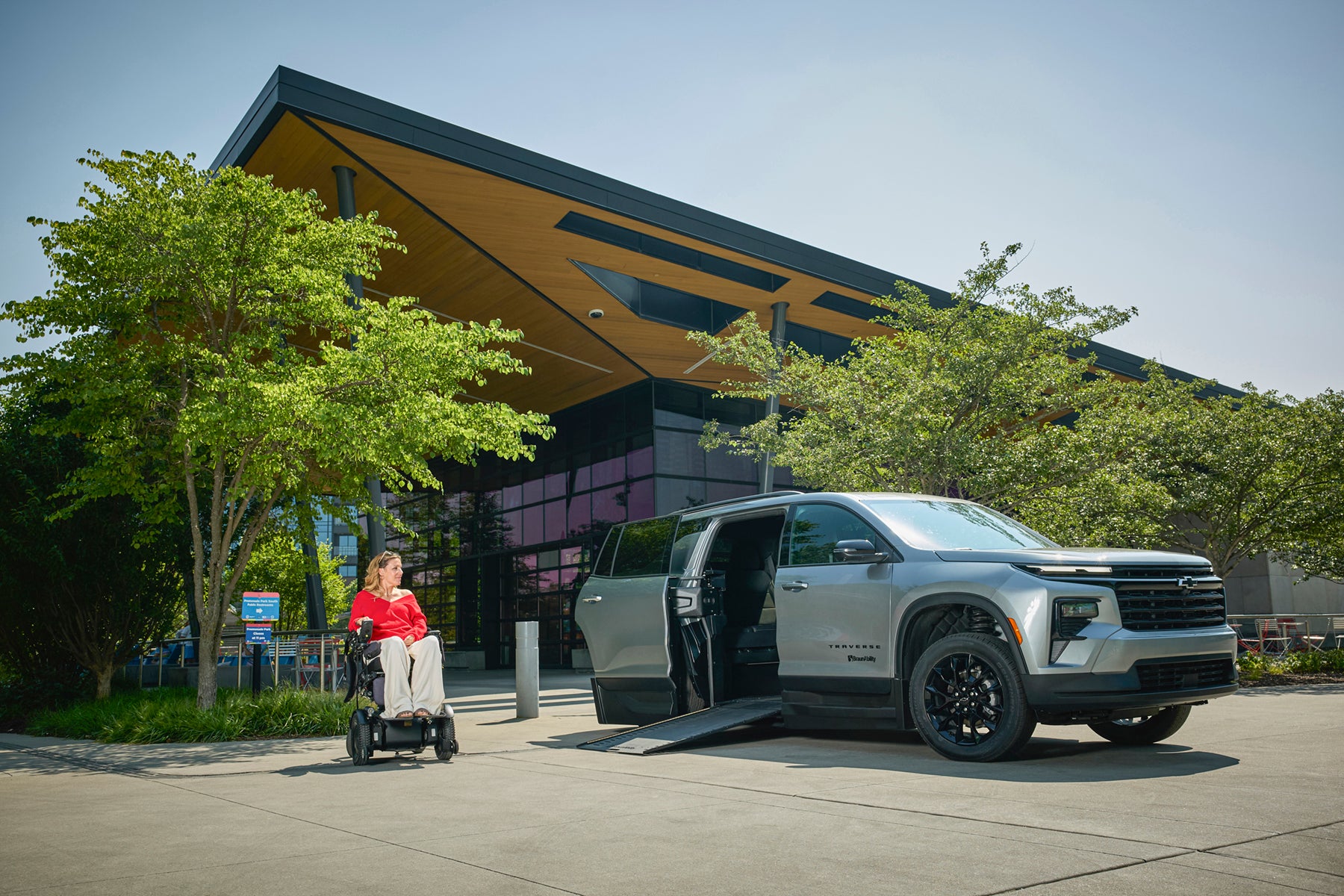
Next-Gen-Traverse-Erica-021-Low

Investing in Freedom – Tax Season & Mobility Grants

It’s the middle of March, and "Tax Season" is the phrase on everyone’s lips. While filing taxes can be a headache, it’s also one of the best times to explore financial avenues for a new mobility vehicle. This week, we’re breaking down how you can turn your refund (and other resources) into a more accessible life. Tax Deductions and Medical Expenses Did you know that the cost of mobility equipment—and even a portion of the vehicle cost itself—can often be considered a deductible medical expense? If a vehicle is modified for wheelchair use, the IRS often allows you to deduct the cost of the modifications. Always consult with a tax professional in Maryland to see how this applies to your specific situation. Beyond the Refund: Grants and Assistance A tax refund is a great start, but it’s rarely the whole story. At Jerry’s Mobility, we work closely with: Maryland Department of Disabilities: Exploring state-level grants for workplace or educational independence. Veteran Affairs (VA): We are proud to assist our Carney veterans in navigating VA auto grants (like Form 21-4502). Manufacturer Rebates: Many manufacturers offer up to $1,000 back on mobility conversions for new vehicles. Don't let the price tag of independence hold you back. Let’s sit down and look at the numbers together—you might be closer to a new ride than you think. Connect with us today!

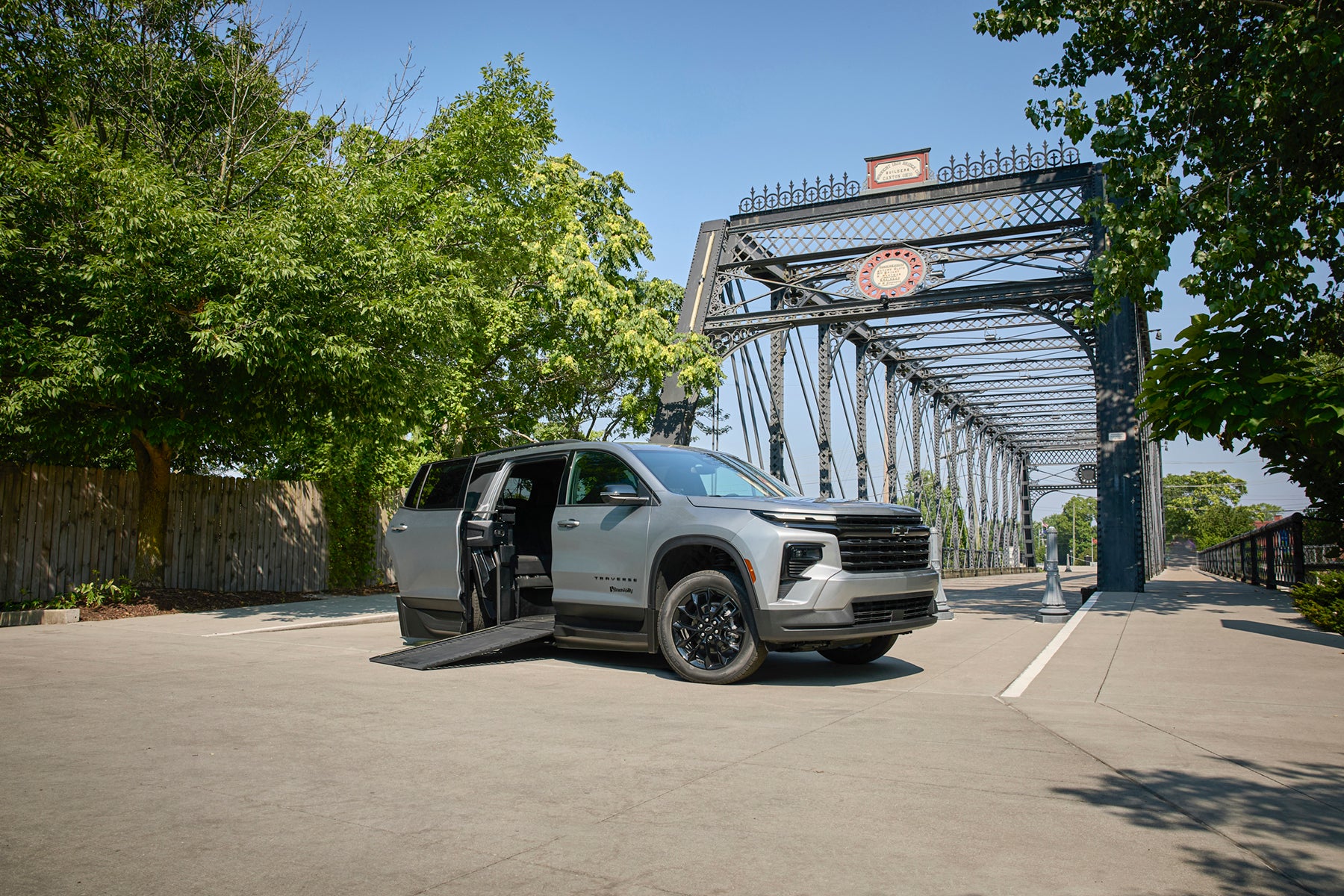
Next-Gen-Traverse-Bridge-005-Low

The 2026 Chevrolet Traverse – A Modern Marvel of Space

For years, the minivan was the undisputed king of the mobility world. But in 2026, the Chevrolet Traverse is proving that you don’t have to sacrifice style for accessibility. This week, we’re spotlighting why the newest Traverse conversion is the "it" vehicle for Maryland families. Style Meets Substance The 2026 Traverse features a bold, truck-inspired design that looks just as good at a Ravens tailgate as it does in the driveway. But the real magic happens inside. With the latest conversion technology, the Traverse offers a lowered floor that provides industry-leading headroom for power chair users. Why 2026 is the Year to Upgrade: Enhanced Super Cruise: Imagine a hands-free drive down to the Eastern Shore. The 2026 model’s Super Cruise tech is more intuitive than ever, reducing driver fatigue on long hauls. Flexible Seating: Whether you need the "removable front seat" option to drive from your chair or a "mid-row" position to stay close to the kids, the 2026 layout is incredibly modular. Zero-Effort Ramps: The new power-fold ramps are quieter and faster, meaning less time waiting in the rain and more time getting where you need to go.

Snow-Plow-with-Road-Salt

Spring-Cleaning Your Independence

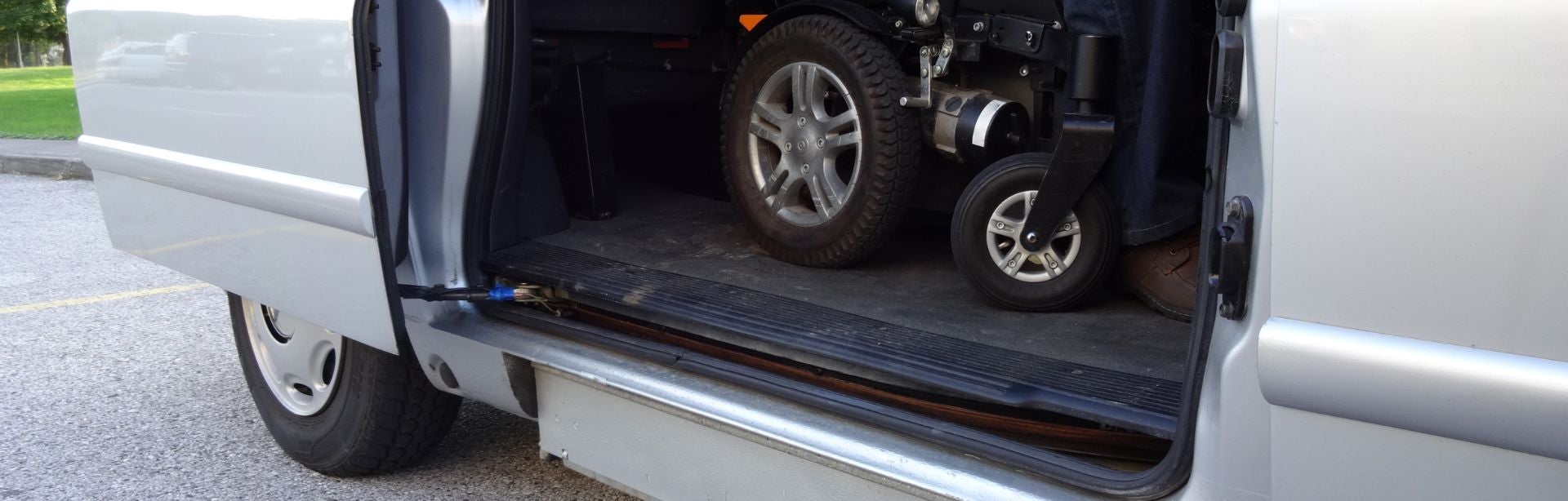
March in Maryland is a breath of fresh air, but for wheelchair-accessible vehicles (WAVs), it’s a season of recovery. Those winter months on I-695 weren’t just cold; they were corrosive. Road salt and grime are the silent enemies of hydraulic lifts and aluminum ramps. This week, we’re focusing on how to ensure your mobility equipment is as ready for spring as you are. The Toll of a Baltimore Winter Salt is incredibly effective at melting ice, but it’s equally good at "eating" the delicate sensors and moving parts of your ramp system. If you’ve noticed your ramp deploying a bit slower or making a new "squeak" when you head to the grocery store, it’s time for a deep clean. At Jerry’s Mobility, we don’t just wash the exterior; we perform a specialized undercarriage and track flush to remove debris that could lead to a mid-trip failure. Maintenance Checklist: Track Lubrication: Ensure the tracks are free of pebbles and salt crystals. Battery Health: Cold weather strains batteries. Since many lifts run on the vehicle’s electrical system, a weak battery can leave you stranded. Tire Pressure: Drastic temperature swings in Carney mean your "Low Tire Pressure" light is likely on. Proper inflation is key for a smooth, level ride. The Jerry’s Mobility Difference We believe maintenance is about more than just mechanics; it’s about peace of mind. Our certified technicians are trained specifically in BraunAbility and Vantage Mobility (VMI) systems. While we work, enjoy our accessible lounge or take advantage of our local shuttle service. Schedule an appointment today!

_Wheelchair_Accessible_Places_and_Activities_in_Baltimore_MD_637619419888716990

The Freedom of Choice: Presidential Mobility Savings

President’s Day is more than just a long weekend; it’s a celebration of independence. At Jerry’s Mobility, we take that literally. To us, independence means being able to go to work, visit family, or run errands on your own terms. Our "Executive Access" event this February is designed to put the power of choice back in your hands with significant incentives on our most popular 2026 mobility models. Leading the Fleet: The Chrysler Pacifica For many of our customers, the right vehicle is all about finding the perfect balance of luxury and utility. The 2026 Chrysler Pacifica with a BraunAbility® or Vantage Mobility (VMI) conversion is the gold standard for those who refuse to compromise on comfort. While SUVs have their strengths, the Pacifica offers a sophisticated, low-profile ride that makes every trip feel like a first-class experience. With its available All-Wheel Drive (AWD), this isn’t just a fair-weather van; it’s engineered to handle snowy Maryland commutes with confidence and poise. Inside, you’ll find an industry-leading interior that provides a spacious, open floor plan and significant door height—making it an ideal choice for power chair users who need extra clearance without the step-up height of a larger truck. Navigating the "Stimulus" of Mobility Financing We know that mobility equipment is a major investment. That’s why our specialists are trained to help you find every available dollar to help: Manufacturer Rebates: Many major brands, including Chevrolet and Chrysler, offer mobility reimbursements of up to $1,000 on new vehicle conversions. Tax Benefits: In many cases, the cost of mobility conversions can be considered a deductible medical expense. (Always consult with a tax professional regarding your specific situation!) Certified Pre-Owned: If a brand-new 2026 model isn't in the budget, our "Presidential Selection" of late-model used vans offers the same reliability at a lower price point. This February, don't just dream of independence—drive it. Come see the team at Jerry's Mobility and let's find the perfect fit for your lifestyle. Disclaimer: Information regarding tax deductions and manufacturer rebates is provided for educational purposes. Please consult with a qualified tax professional or your Jerry's Mobility specialist for current program eligibility.

Contact Us

Fill out this form below and we'll contact you shortly
*Required Fields