


Blog / Wheelchair Accessible Vehicles

Caregiver’s Checklist: Safe Loading & Securement Protocols for Wheelchair Passengers

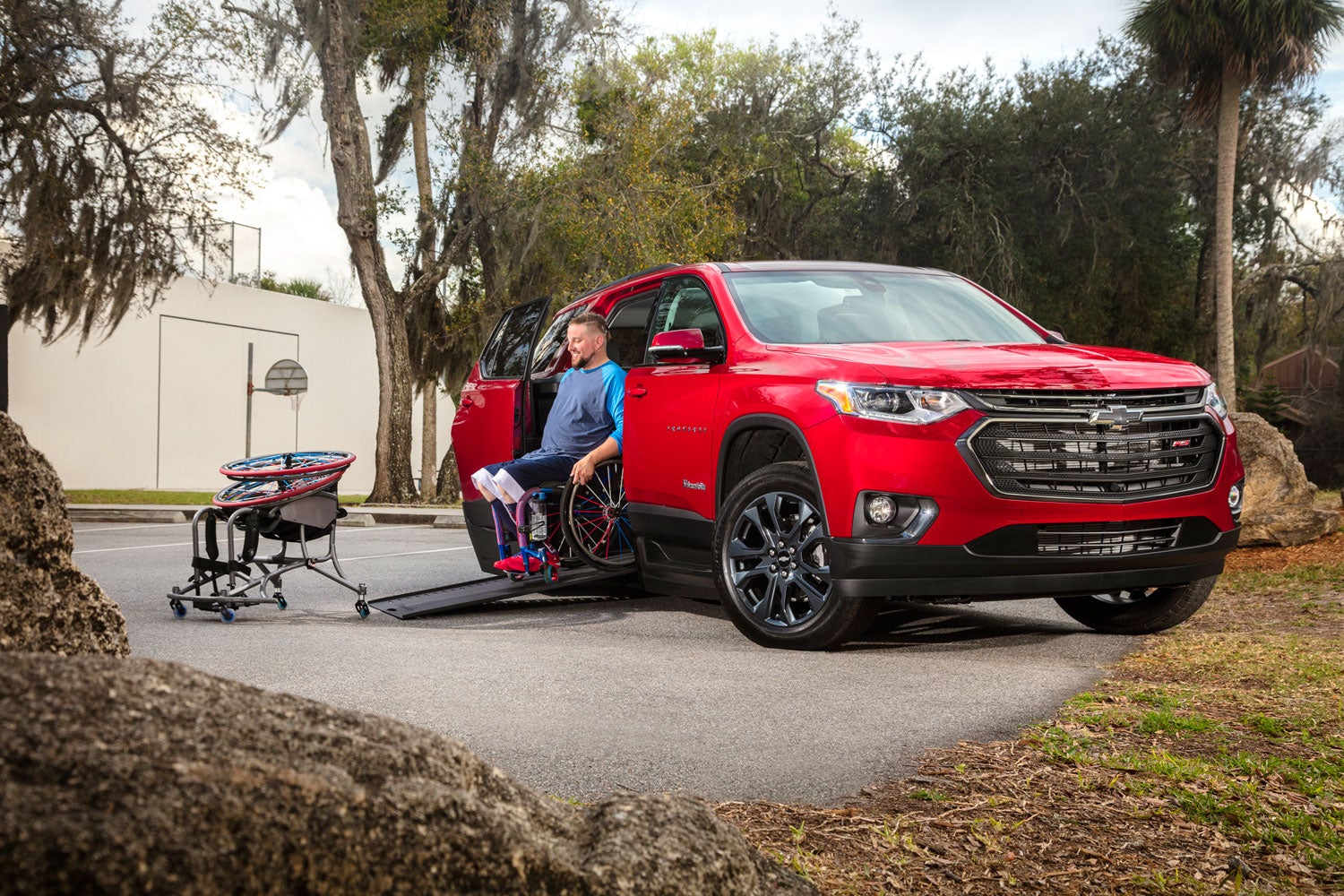
Traverse Chevrolet

Quick Answer: How Do You Safely Load and Secure a Wheelchair Passenger in a Handicap Van?

To safely load a wheelchair passenger, position the vehicle on level ground, engage the kneeling system, and roll the wheelchair facing forward into the cabin. Anchor a 4-point WTORS tie-down system (Q'Straint or EZ Lock) to welded frame points, tightening retractors until taut. Secure a 3-point lap and shoulder belt low across the pelvis and chest, and know your emergency manual ramp override procedure in case of vehicle power loss across Baltimore, Rosedale, and Perry Hall.

Pre-Loading Checklist: Surface and Vehicle Preparation

Before deploying a ramp on any handicap van Baltimore caregivers operate, evaluating the immediate environment prevents unnecessary ramp incline and loading hazards.

  1. Park on Flat, Level Ground: Position the vehicle on a level asphalt or concrete pad. Parking on steep driveways in suburban Perry Hall creates sharp ramp angles that make manual pushing difficult.

  2. Clear Unloading Zones: Maintain at least 5 to 6 feet of side or rear clearance to allow full power ramp deployment and smooth turning radiuses.

  3. Engage Kneeling and Power Kneel: Ensure the vehicle's automatic kneeling system lowers the rear suspension to minimize the entry slope.

  4. Inspect the Ramp Surface: Ensure non-skid ramp surfaces are clear of rain, ice, or salt slurry tracked in during Mid-Atlantic winter months.

4-Point Tie-Down Operation (Q'Straint & EZ Lock Protocols)

Properly anchoring a wheelchair inside an accessible vehicle prevents dangerous device movement during sudden stops or sharp turns along Interstate 695. Caregivers shopping for a pre-owned handicap van for sale like the Chrysler Voyager should master these exact securement steps:

  1. Position Facing Forward: Center the wheelchair facing forward over the floor-mounted L-tracks. Sideways or rear-facing seating violates federal transit safety regulations.

  2. Lock Brakes and Power Off: Turn off the joystick controller on electric power chairs and engage manual wheel locks.

  3. Attach Front Retractor Straps: Hook front J-hooks or carabiners to solid, welded frame points (WC19 transit option brackets). Angle the straps outward slightly for lateral stability.

  4. Attach Rear Retractor Straps: Connect rear retractors directly behind the rear wheel axles to main structural frame members.

  5. Tension the System: Release retractor levers, pull webbing taut, and turn manual tensioning knobs until all slack is eliminated. The chair should have zero wobble when pulled.

  6. Automatic Docking Alternative (EZ Lock): If using an EZ Lock floor pin system, guide the wheelchair straight into the floor bracket until the locking jaws click shut, then turn off the chair power and verify the dash indicator light turns green.

Occupant Belt Positioning: Lap and Shoulder Restraints

A postural positioning belt attached directly to a wheelchair does not provide crash protection. Caregivers evaluating a handicap wheelchair accessible van near me such as the Honda Odyssey must utilize the vehicle's integrated 3-point occupant restraint system. Complete safety and crash-test guidelines can be reviewed through the University of Michigan Transportation Research Institute Ride Safe Guide.

  1. Position the Lap Belt Low: Route the vehicle lap belt low across the pelvis and upper thighs. Never place the belt across the soft abdomen or over wheelchair armrests.

  2. Diagonal Shoulder Belt Alignment: Extend the shoulder belt diagonally across the center of the chest and collarbone, anchoring it into the upper wall pillar track.

  3. Check Webbing Alignment: Ensure all belt webbing lays flat against the passenger without twists, knots, or slack underneath heavy coats.

Emergency Manual Ramp Override Protocols

In the event of a total vehicle power failure, 12V auxiliary battery drain, or actuator blown fuse, BraunAbility side-entry and rear-entry ramps feature built-in mechanical overrides to ensure passengers are never stranded inside the vehicle.

  1. Locate the Manual Release Handle: Open the passenger slide door manually. For fold-out ramps, locate the manual release lever or release pin near the ramp hinge base.

  2. Disengage the Drive Motor: Pull the release pin or lever firmly to disengage the electric drive chain or motor gearbox from the ramp structure.

  3. Manually Deploy or Stow the Ramp: Lift or push the ramp outward using the manual handle grips. Control the weight carefully as it extends to the ground pad.

  4. Manual Door Operation: Push the side sliding door fully backward until it latches into the open position before rolling the wheelchair out safely in your Rosedale driveway or parking area.

Adaptive Transit Equipment Inspections at Jerry’s Mobility

Mastering securement and emergency override protocols ensures complete safety for every journey across Greater Baltimore. If you need hands-on demonstration of Q'Straint retractors, L-track adjustments, or a routine ramp system checkup, our certified technicians are here to help.

Visit our showroom today to test drive our inventory of accessible vehicles, inspect equipment setups, and get hands-on guidance from our dedicated mobility specialists.

Posted in:

Related Posts

Toyota Sienna

Toyota Sienna Hybrid Wheelchair Vans: Fuel Efficiency & Range for Maryland Commuters

Quick Answer: How Efficient Is a Toyota Sienna Hybrid Wheelchair Van for Maryland Commuters? Commuters choose the Toyota Sienna wheelchair van in Baltimore thanks to its EPA-estimated 36 MPG combined in both city and highway driving, providing over 600 miles of range on a single tank. BraunAbility engineered this hybrid conversion to retain 100% of its original fuel economy, giving daily commuters in Perry Hall and Rosedale maximum fuel savings without sacrificing cabin space or ramp capacity. Reimagining the Mobility Commute Across Greater Baltimore Daily commuting across Baltimore County often involves long stretches on Interstate 695, heavy traffic along Interstate 95, and frequent stop-and-go driving through Belair Road in Perry Hall and Pulaski Highway in Rosedale. For wheelchair users, caregivers, and families making regular trips to Baltimore medical centers, traditional gas-guzzling minivans can lead to high monthly fuel costs. The Toyota Sienna Hybrid changed the accessibility landscape by introducing standard hybrid technology across its entire lineup. Choosing a pre-owned or new Toyota Sienna wheelchair van converted by BraunAbility offers a rare combination: best-in-class fuel economy, exceptional driving range, and uncompromised wheelchair accessibility. Real-World MPG and Range: Breaking Down the Hybrid Drivetrain Unlike conventional vehicles that burn excess fuel during idle traffic on the Baltimore Beltway, the Toyota Sienna Hybrid utilizes an advanced gas-electric powertrain engineered for optimal energy efficiency. 1. 36 MPG Combined Efficiency The Sienna Hybrid pairs a 2.5-liter four-cylinder gasoline engine with high-torque electric motors, producing a combined 245 net horsepower. City Fuel Economy: 36 MPG. Electric motors handle low-speed acceleration and stop-and-go urban traffic through downtown Baltimore, reducing fuel consumption. Highway Fuel Economy: 36 MPG. Smooth gas-electric switching maintains efficiency at cruising speeds along I-95 and I-695. Retained Post-Conversion Efficiency: BraunAbility spent over 55,000 engineering hours designing the lowered-floor chassis to ensure that the added weight and aerodynamic profile of the conversion retain Toyota's original 36 MPG rating. 2. Over 600 Miles of Total Driving Range Equipped with an 18-gallon fuel tank, the Toyota Sienna Hybrid achieves a maximum driving range of over 600 miles between fill-ups. Fewer Fuel Stops: Caregivers and power chair users avoid frequent stops at gas stations, which can be challenging during winter weather or in unlit areas. Long-Distance Travel: Ideal for regional road trips across Maryland, Washington D.C., and Pennsylvania without constant refueling stops. To explore how hybrid and alternative fuel vehicles lower overall operating costs for daily commuters, review energy efficiency data provided by the U.S. Department of Energy Alternative Fuels Data Center. Commuting Routes: Perry Hall, Rosedale, and the Baltimore Beltway Vehicle efficiency depends heavily on driving conditions. The Sienna Hybrid’s regenerative braking system excels across common Baltimore County commuting corridors: The Belair Road / Route 1 Corridor (Perry Hall to Baltimore): Frequent traffic lights allow the hybrid system to capture kinetic energy during braking, recharging the hybrid battery without needing to plug into an electrical outlet. The Pulaski Highway / I-695 Route (Rosedale to Medical Centers): Merging onto high-speed highways is smooth and responsive, thanks to immediate electric torque delivered alongside the gasoline engine. Urban Medical Center Navigation: Navigating low-speed parking garages at Johns Hopkins or MedStar Bayview relies heavily on quiet electric power, reducing cabin noise and exhaust emissions. BraunAbility Conversion Integrity: Space, Capacity, and Battery Placement A major concern for buyers considering a hybrid handicap van is whether the high-voltage hybrid battery compromises interior cabin space or ramp width. Strategic Battery Engineering BraunAbility engineers worked alongside vehicle component suppliers to relocate hybrid battery wiring harnesses safely without intruding on the lowered floor pan. Lowered Floor Subframe: The floor is lowered from the front firewall back to the third-row seat, providing up to 59.5 inches of interior height at the front seating positions and 60.5 inches in the center cabin. Heavy-Duty 1,000-lb Ramp Capacity: Equipped with a BraunAbility power in-floor or power fold-out ramp, the system supports up to 1,000 lbs, accommodating heavy complex rehab power chairs and adult occupants. 31-Inch Usable Door Opening Width: Provides ample door clearance for wide power chair frames and joystick controllers. 3,500-lb Towing Capacity: Retains the factory towing rating, allowing families to tow small utility trailers or pop-up campers for weekend getaways. Financial Savings and Pre-Owned Value at Jerry's Mobility Investing in a pre-owned Toyota Sienna Hybrid wheelchair van delivers double financial value: significant upfront savings on a pre-owned vehicle, combined with long-term monthly savings at the gas pump. When comparing a traditional non-hybrid minivan averaging 18 to 20 MPG against a Toyota Sienna Hybrid averaging 36 MPG, a commuter driving 15,000 miles per year across Greater Baltimore can cut their annual fuel expenses nearly in half. At Jerry's Mobility, our team of certified specialists helps buyers across Baltimore, Rosedale, and Perry Hall evaluate trade-in values, apply state grants, and secure flexible pre-owned mobility financing options. Every pre-owned Sienna Hybrid on our lot undergoes a thorough technician inspection to verify hybrid battery health, ramp drive cables, auto-kneeling actuators, and structural floor seals. Contact our showroom today to schedule a hands-on wheelchair fitting and test drive a BraunAbility Toyota Sienna Hybrid.

HOnda_Odyssey

Family-First Accessibility: Honda Odyssey BraunAbility Van Features for Perry Hall & Rosedale

Quick Answer: Why Is the Honda Odyssey BraunAbility Van Ideal for Perry Hall and Rosedale Families? The Honda Odyssey wheelchair van that Baltimore caregivers love delivers family-focused accessibility through a spacious 92.5-inch flat floor pan, removable front seats, and a 1,000-pound capacity power in-floor ramp. Ideal for daily school drop-offs and medical visits across Perry Hall and Rosedale, the Odyssey combines smooth Honda V6 performance with generous mid-cabin maneuvering room for complex power chairs. Combining Family Comfort with BraunAbility Engineering in Baltimore County Transporting a family member who uses a wheelchair requires a vehicle that balances physical accessibility with everyday family comfort. Minivans need to handle suburban carpool lines, weekend trips along the Belair Road corridor, and daily commutes into Greater Baltimore medical hubs without feeling like a commercial bus. The Honda Odyssey converted by BraunAbility delivers this balance. Known for its smooth car-like ride, refined interior styling, and high safety ratings, the Odyssey platform serves as a favorite choice for caregivers and parents across Perry Hall, MD, and Rosedale, MD. When retrofitted with BraunAbility's lowered-floor technology, a pre-owned or new Honda wheelchair van offers complete independence while keeping the whole family connected during travel. Standout Accessibility Features of the BraunAbility Honda Odyssey BraunAbility engineers its Honda Odyssey conversions to maintain the minivan's sleek appearance while maximizing interior clearance. Technical metrics and safety standards can be reviewed directly through BraunAbility Official Conversion Specifications. 1. Power In-Floor Ramp with 1,000-lb Weight Capacity The centerpiece of the BraunAbility Honda Odyssey is its power in-floor ramp system. Quiet In-Floor Stowing: When not in use, the 30.25-inch wide ramp slides horizontally beneath the lowered floor pan. This leaves the side door opening completely clear for ambulatory children, parents, or grandparents entering and exiting the vehicle. 1,000-Pound Heavy-Duty Rating: The reinforced ramp platform supports up to 1,000 lbs, making it capable of carrying heavy power wheelchairs, specialized seating accessories, and adult occupants safely. Wayfinder™ LED Guide Lighting: Integrated LED lighting strips run along the ramp edges, illuminating the entry platform for safe loading in dark driveways or unlit parking lots across Perry Hall. 2. Expanded Interior Cabin Space BraunAbility lowers the floor from the front firewall back to the third-row seat, creating an expansive 92.5-inch flat floor length. Doorway Dimensions: The side door offers 54.5 inches of usable entrance height and 30.25 inches of usable width, preventing joystick controls or headrests from catching on door seals. Interior Headroom: Seated passengers enjoy 58 inches of interior height in the front driver/passenger positions and 59.5 inches at the center of the cabin. 360-Degree Turning Area: With 71 inches of interior width at the sliding doors, wheelchair users have ample space to rotate their chair into a comfortable forward-facing position. Family-First Interior Flexibility for Caregivers Suburban families in Perry Hall and Rosedale often carry a mix of passengers, groceries, sports gear, and mobility equipment. The Odyssey's interior design adapts easily to changing family needs. Removable Step & Roll Front Seats Both the driver and front passenger bucket seats feature quick-release bases on built-in wheels. A caregiver can easily unlock and roll out either front seat, allowing a wheelchair user to ride in the front passenger position or transfer directly into the driver position. Mid-Cabin Family Connection When riding in the center row, a wheelchair user sits alongside remaining second-row seating. Parents or siblings can sit right next to the wheelchair user, making it easy to assist with snacks, entertainment screens, or conversation during trips across the Baltimore County beltway. SmartSuite+ Diagnostic Protection Modern BraunAbility Honda conversions come equipped with SmartSuite+ technology. This onboard system monitors ramp motor performance, door sensors, and battery voltage in real time. If a potential mechanical issue arises, SmartSuite+ alerts the driver before a system failure occurs, giving families added peace of mind. Local Parking and Commuting Performance in Perry Hall & Rosedale A mobility vehicle must fit seamlessly into your local home and neighborhood environment. Driveway Loading in Perry Hall: Suburban single-family homes in Perry Hall often feature sloped or double-car driveways. The Odyssey's automatic kneeling suspension lowers the rear corner of the van as the ramp deploys, reducing the ramp slope angle to a gentle 9.2 degrees for effortless manual pushing or power chair ascension. Garage Parking in Rosedale: Because the power in-floor ramp stows completely inside the floor structure rather than folding up vertically against the glass, window sightlines remain open. The overall vehicle height of 75 inches clears standard 7-foot residential garage doors comfortably. Highway Passing Power: Powered by Honda's 3.5-liter V6 engine, the Odyssey delivers responsive highway acceleration on I-695 and I-95, while retaining a factory towing rating of up to 3,500 lbs for small utility trailers. Finding a Pre-Owned Honda Odyssey at Jerry's Mobility For budget-conscious families looking for a clean Honda wheelchair van for sale, shopping pre-owned inventory offers significant savings off the original sticker price. At Jerry's Mobility, every pre-owned Honda Odyssey undergoes our multi-point technician inspection. Our certified shop team checks lower floor subframe seals, tests automatic kneeling actuators, verifies secondary battery output, and inspects Q'Straint floor anchors to ensure the vehicle meets strict safety standards. Browse our online selection of pre-owned wheelchair accessible vans or visit our showroom today. Our mobility specialists are ready to help your family test drive a BraunAbility Honda Odyssey, schedule a personalized wheelchair fitting, and explore flexible financing options.

ramp

Winterizing and Maintaining Your BraunAbility Ramp in Greater Baltimore

Quick Answer: How Do You Protect a Wheelchair Van Ramp During Maryland Winters? To protect a BraunAbility ramp during Maryland winters, owners should regularly clear road salt and slush from the lower door tracks, lubricate pivot hinges with dealer-approved spray, check battery health, and test the manual emergency override. Mid-Atlantic freezing rain and road brine accelerate corrosion, making bi-annual inspections by a certified mobility technician essential for drivers searching for a reliable wheelchair van in the Greater Baltimore area. The Mid-Atlantic Winter Challenge for Mobility Vehicles Winters in Greater Baltimore bring a unique combination of freezing rain, slush, and heavy road salt application along major thoroughfares like I-695, I-95, and Belair Road. While a lowered-floor conversion provides daily freedom, exposure to road brine and freezing moisture can take a toll on automated entry systems if left unmaintained. Whether you navigate suburban neighborhood streets in Perry Hall, park in residential driveways in Rosedale, or commute into downtown Baltimore medical centers, winterizing your vehicle protects your investment. Regular seasonal care ensures that your power fold-out or in-floor ramp deploys smoothly every time, regardless of freezing temperatures outside. 5 Essential Steps to Winterize Your BraunAbility Ramp Proactive seasonal maintenance keeps mechanical linkages moving freely and prevents unexpected winter breakdowns. Follow these technician-recommended steps to prepare your accessible vehicle for cold weather: 1. Clear Road Brine, Salt, and Slush from Door Channels As power wheelchairs travel across salted sidewalks and slushy parking lots, tires track road salt directly into the vehicle's lowered door channel. Accumulated grit acts like sandpaper against door rollers, drive cables, and weather seals. Action: Once a week during winter months, use a soft brush or vacuum to remove dry salt, dirt, and gravel from the lower sliding door track and ramp pan. Wipe down rubber door seals with a damp cloth to prevent ice from bonding the door to the vehicle frame. 2. Lubricate Hinges, Pivot Pins, and Rollers Cold temperatures cause metal components to contract and unlubricated joints to bind or operate noisily. Applying the correct lubricant keeps pivot arms, ramp hinges, and door slides moving effortlessly. Action: Spray a light layer of dealer-approved synthetic lubricant or silicone spray on moving ramp hinges, drive arm pivot pins, and door rollers. Avoid heavy grease products, which attract road salt grit and create abrasive sludge inside the mechanisms. 3. Inspect and Test the Vehicle Battery Health Automated ramps, power sliding doors, and electric kneeling suspension systems draw significant power from the vehicle's electrical system. Freezing temperatures can reduce standard 12-volt battery capacity by up to 50%, leaving insufficient voltage to deploy or stow a heavy power ramp. Action: Have your battery and charging system load-tested before winter arrives. Clean any white oxidation corrosion from battery terminals and ensure secondary auxiliary batteries powering conversion equipment are fully charged. 4. Verify Manual Override Backup Operation In the event of extreme cold weather battery failure or an electrical fault, every BraunAbility conversion features a built-in manual backup override system. Knowing how to operate this manual system ensures you will never be stranded inside or outside your vehicle. Action: Retrieve your manual crank handle or relief valve tool (typically stored beneath the front seat or side panel). Perform a test manual deployment and stowing cycle in your driveway before severe winter weather hits. 5. Inspect Floor-Mounted Wheelchair Securement Tracks Slush and melted snow carrying road salt often collect in the floor-mounted L-track or EZ Lock docking mechanisms inside the vehicle cabin. Salt build-up inside lock jaws or track slots can prevent wheelchair tie-down plungers from latching securely. Action: Vacuum debris out of floor tracks and clean latching mechanisms. Inspect Q'Straint webbing straps for salt stiffening or fraying, replacing worn restraints immediately to maintain passenger safety. In-Floor vs. Fold-Out Ramps: Cold Weather Considerations Different conversion designs interact with Mid-Atlantic winter elements in distinct ways: In-Floor Ramp Systems: Because in-floor ramps slide horizontally into a protective cassette housing beneath the vehicle floor, they remain shielded from direct snowfall while driving. However, owners must keep the outer door threshold clear of frozen slush so the ramp pan opens smoothly. This design is widely popular on vehicles like a pre-owned Toyota Sienna wheelchair van. Fold-Out Ramp Systems: Fold-out ramps rest vertically inside the passenger door frame, keeping deployment motors inside the warm vehicle cabin. Caregivers should brush off heavy snow or slush from the ramp surface before stowing it inside to keep interior carpets dry. Professional Winter Maintenance at Jerry’s Mobility While monthly home cleaning goes a long way toward protecting your conversion, professional seasonal servicing ensures critical under-car components remain fully protected. Adhering to strict standards recognized by the National Mobility Equipment Dealers Association (NMEDA), the certified technicians at Jerry's Mobility perform comprehensive 6-month checkups. During a seasonal inspection at our service center, our team will: Inspect pneumatic and chain-driven kneeling actuators for winter wear. Check undertray corrosion coatings and frame subframe integrity. Adjust door alignment, microswitches, and drive cable tensioning. Clean and lubricate internal door tracks and ramp drive gears. Test conversion wiring harnesses for weather tightness and insulation cracking. Keep Your Vehicle Moving Year-Round Maintaining your BraunAbility ramp during the cold winter months guarantees peace of mind and preserves your vehicle's long-term resale value. If you need a seasonal checkup, replacement tie-downs, or assistance with a wheelchair accessible vehicle near Baltimore, the team at Jerry's Mobility is here to help. Schedule your winter maintenance service today with our certified service department, serving families and caregivers across Greater Baltimore, Rosedale, and Perry Hall.